DR. XANDER PRATT: WHEN TWO ANCESTRAL WORLDS HEAR ONE ANOTHER
With YORUBAHIA, the multidisciplinary artist follows a cultural current from Ile-Ife to Bahia — through memory, spirituality, movement and, above all, Sound.
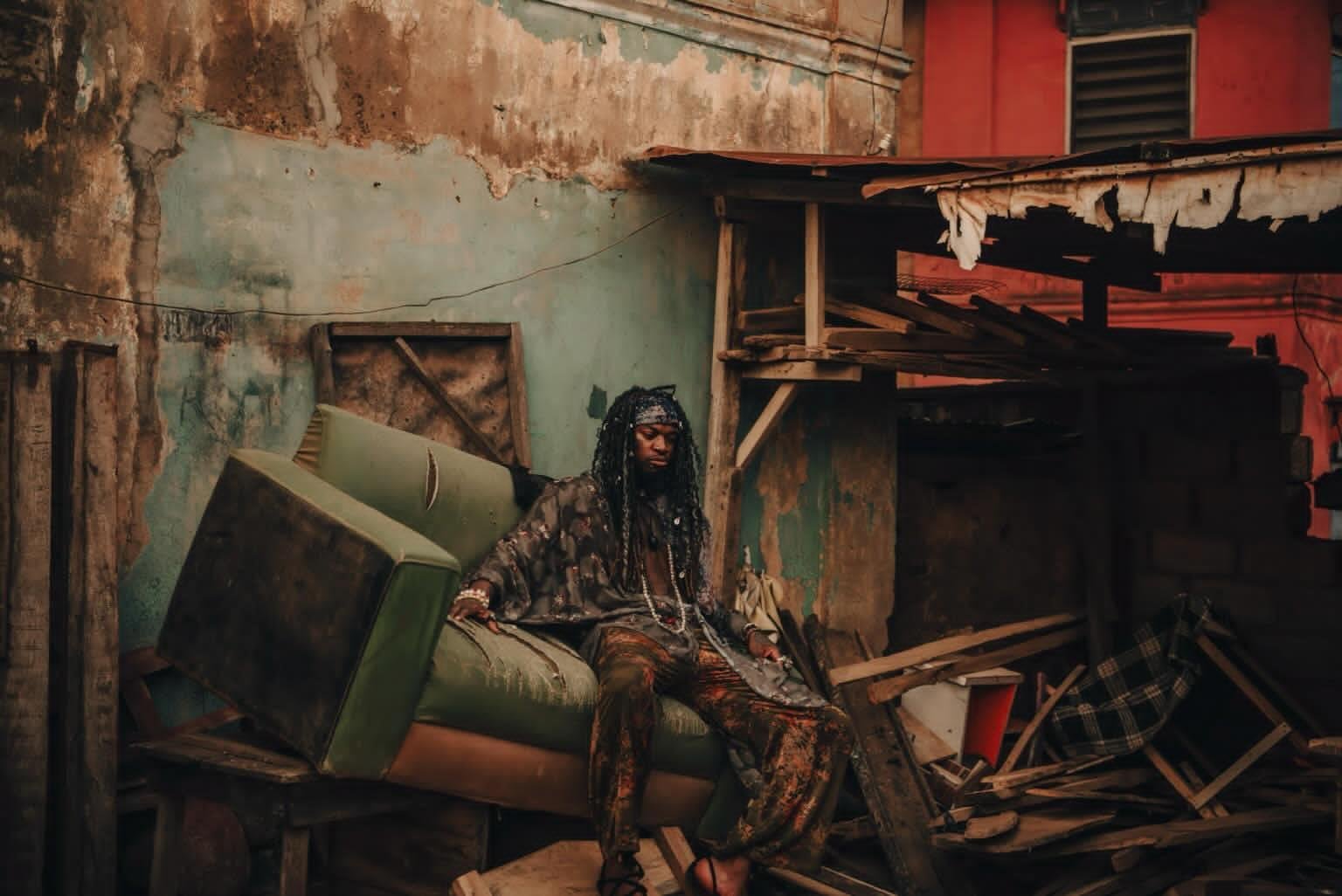
Dr. Xander Pratt in Ile-Ife, Nigeria — at the source of the cultural journey that YORUBAHIA follows across the Atlantic- Photographed by Day Martins
For Dr. Xander Pratt, crossing borders has rarely meant simply arriving somewhere new. The Zimbabwe-born multidisciplinary artist has built a career around the idea that culture can be encountered, listened to and translated across mediums. His work has moved between music, performance, visual art, fashion and cultural research, often returning to the same question: what happens when identities that history separated are allowed to speak to one another again?
That question sits at the centre of YORUBAHIA, Dr. Pratt’s developing feature documentary connecting Ile-Ife in Nigeria with Bahia in Brazil. The project is not conceived as a conventional historical survey. It follows living memory: the rhythms people still play, the movements bodies still know, the spiritual languages communities still practise, and the ways inherited traditions continue to transform in new lands.
THE ATLANTIC WAS NOT THE END OF THE STORY
The history behind that connection is inseparable from the Atlantic slave trade. Over centuries, Portuguese colonial Brazil received millions of enslaved Africans. In the late eighteenth and nineteenth centuries, large numbers of captives, including Yoruba-speaking people from territories that are today principally Nigeria and Benin — were forcibly transported across the Atlantic. Bahia, and particularly Salvador, became one of the most important centres of this African diaspora.
What crossed the ocean with them could not be reduced to labour. People carried languages, cosmologies, foodways, musical structures, ritual knowledge and memories of home. In Bahia, these traditions encountered other African cultures, Catholicism and the realities of a new land. Candomblé emerged from that complex history. Within Candomblé, especially its Nagô-Ketu traditions, Yoruba-derived cosmology, orixá devotion, sacred drumming, song, dance and ritual practice remain profoundly visible.
YORUBAHIA begins from this history but refuses to treat survival as a museum piece. Its interest is in what happened after survival: adaptation, exchange and creation. The documentary asks not only what endured after forced displacement, but what those inherited forms became when they took root in Brazil.
“Not a story of loss. A story of survival. Not just survival — a story of creation.”
A QUESTION BORN IN CAPE TOWN
The project’s present-day journey began in Cape Town in February 2026. During Dr. Pratt’s time in South Africa, he met, Her Regal Majesty Olori Temitope Morenike Enitan-Ogunwusi , an Ijebu Princess and one of the Queens of the Ooni of Ife, His Imperial Majesty, Ooni Adeyeye Enitan Ogunwusi. Xander and Her Regal Majesty met alongside Her Royal Highness Ntokozo KaMayisela Zulu, the first Queen of King Misuzulu, kaZwelithini ka Bhekuzulu KwaNkomonye Royal Palace. The cultural exchange between the three powerhouses led to a conversation between Her Regal Majesty and Dr. Xander Pratt around Yoruba heritage, diaspora and the possibility of following those connections through film. It was in Cape Town that YORUBAHIA moved from an idea into a journey that could be actualised.
That encounter led Dr. Pratt to Ile-Ife, where he was subsequently hosted in connection with the royal household as he prepared for the documentary’s Nigerian chapter. Ile-Ife is widely revered within Yoruba history and tradition as an ancestral and spiritual centre of Yoruba civilisation. For a project concerned with origins, memory and transmission, it offered the natural place to begin listening.
Rather than approaching Yoruba culture from a distance, Dr. Pratt immersed himself in the city, meeting elders and cultural custodians and observing how knowledge is carried through people, ceremony, sound and everyday life. He also met the Ooni of Ife during the visit. The experience sharpened one of the documentary’s central principles: a tradition cannot be understood only through explanation. It must also be encountered through the people who live it.
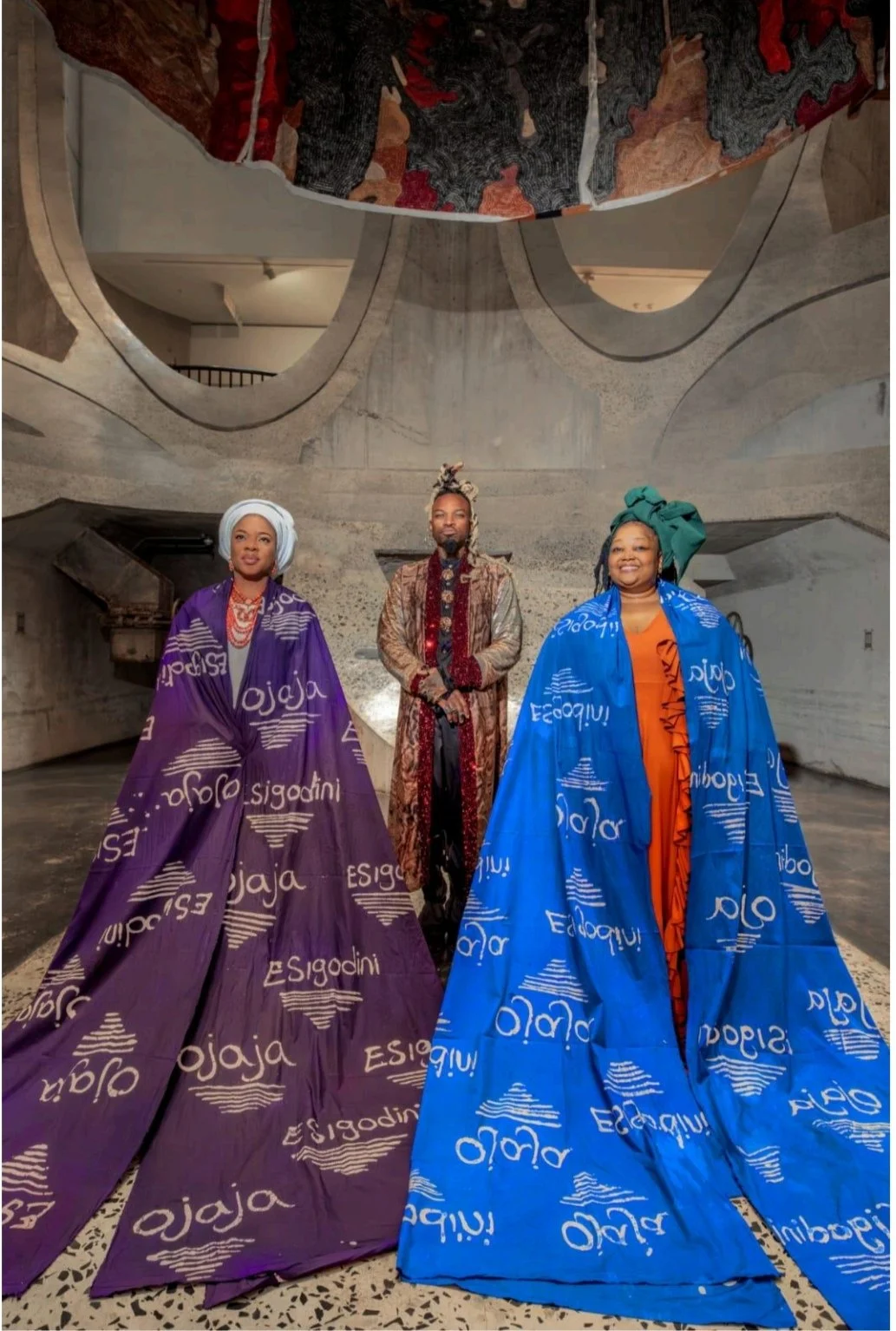
Dr. Xander Pratt at an intersection of cultures between Her Regal Majesty Olori Temitope Morenike Enitan-Ogunwusi (left) and Her Royal Highness Ntokozo KaMayisela Zulu, the first Queen of King (right)- Photographed by Sid Marin
ILE-IFE: CULTURE AS LIVED EXPERIENCE
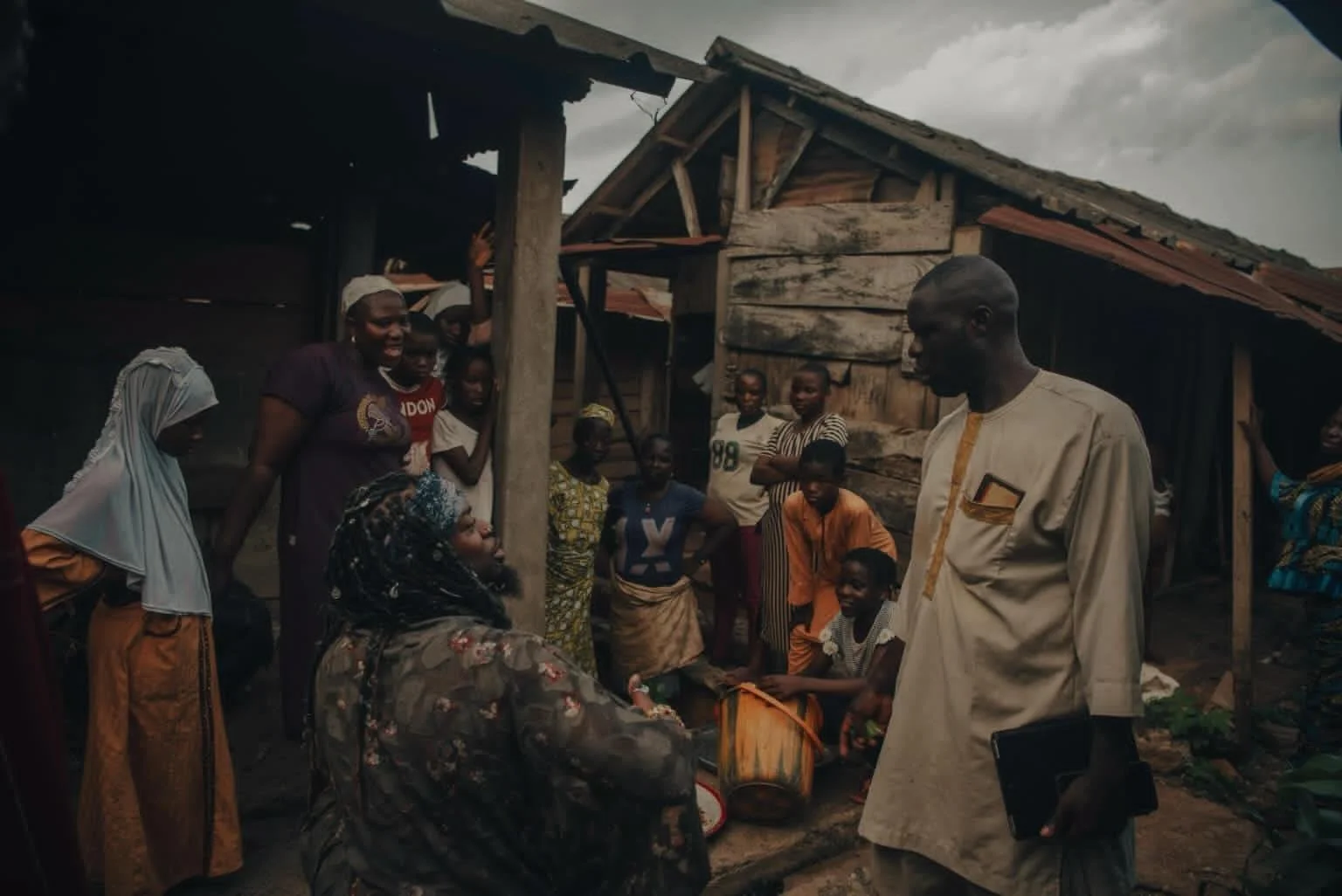
Dr. Xander Pratt speaking with people of the Ile-Ife community, listening to local stories and perspectives- Photographed by Day Martins
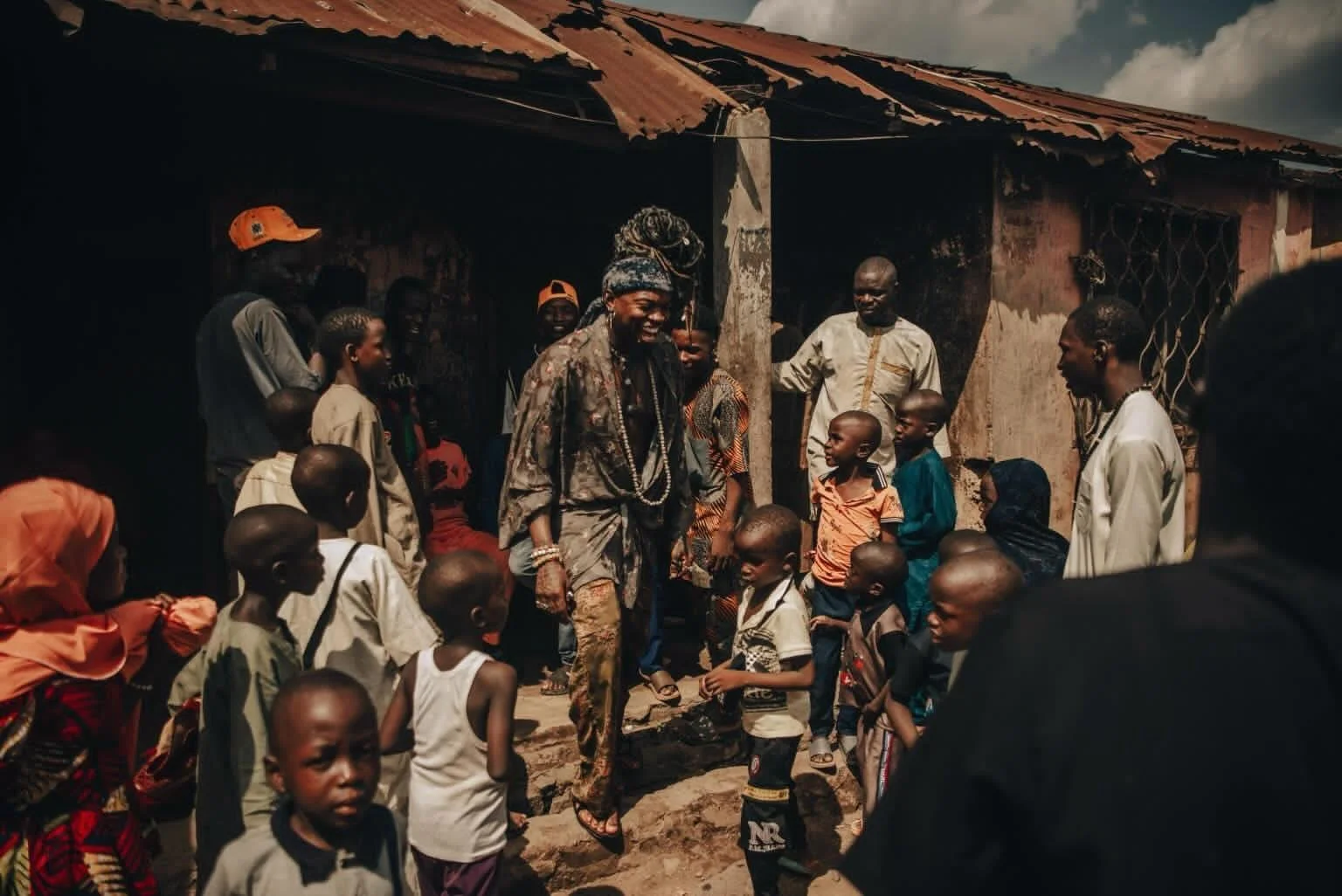
Dr. Xander Pratt among children and community members in Ile-Ife, where cultural knowledge is encountered through people as much as place- Photographed by Day Martins
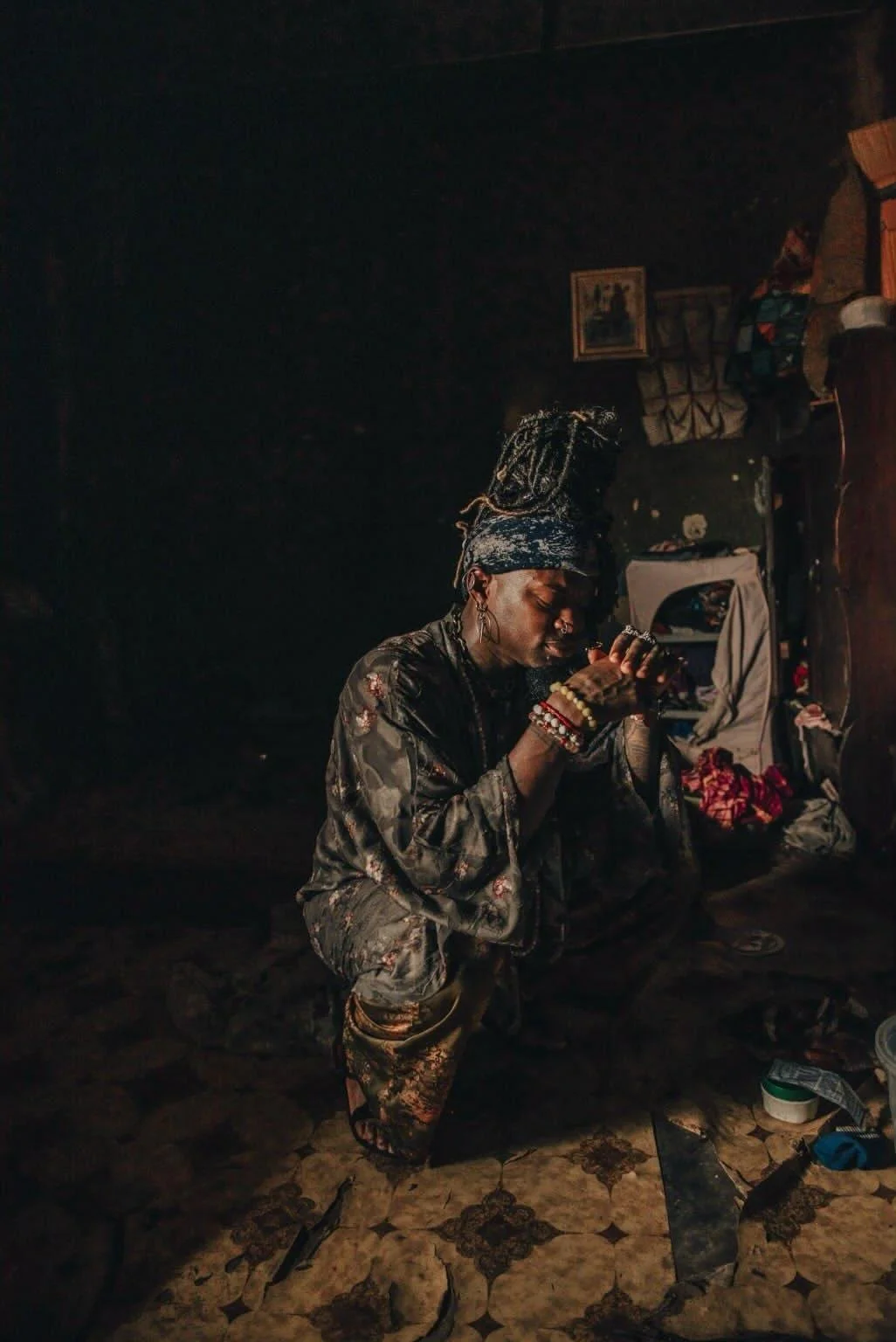
A reflective moment during Dr. Xander Pratt’s immersion in Ile-Ife’s cultural and spiritual landscape- Photographed by Day Martins
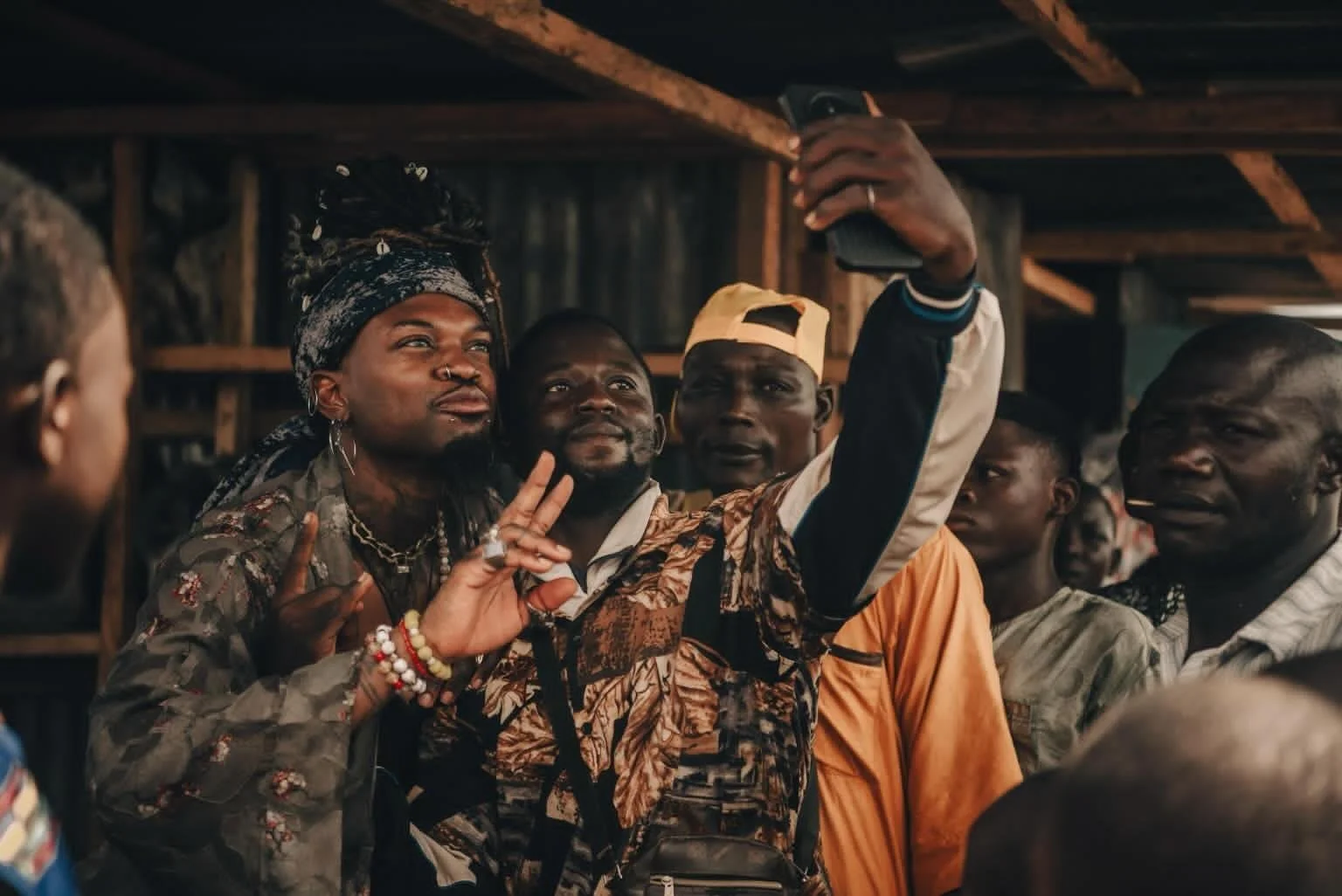
Dr. Xander Pratt with people of the community during an informal exchange in Ile-Ife- Photographed by Day Martins
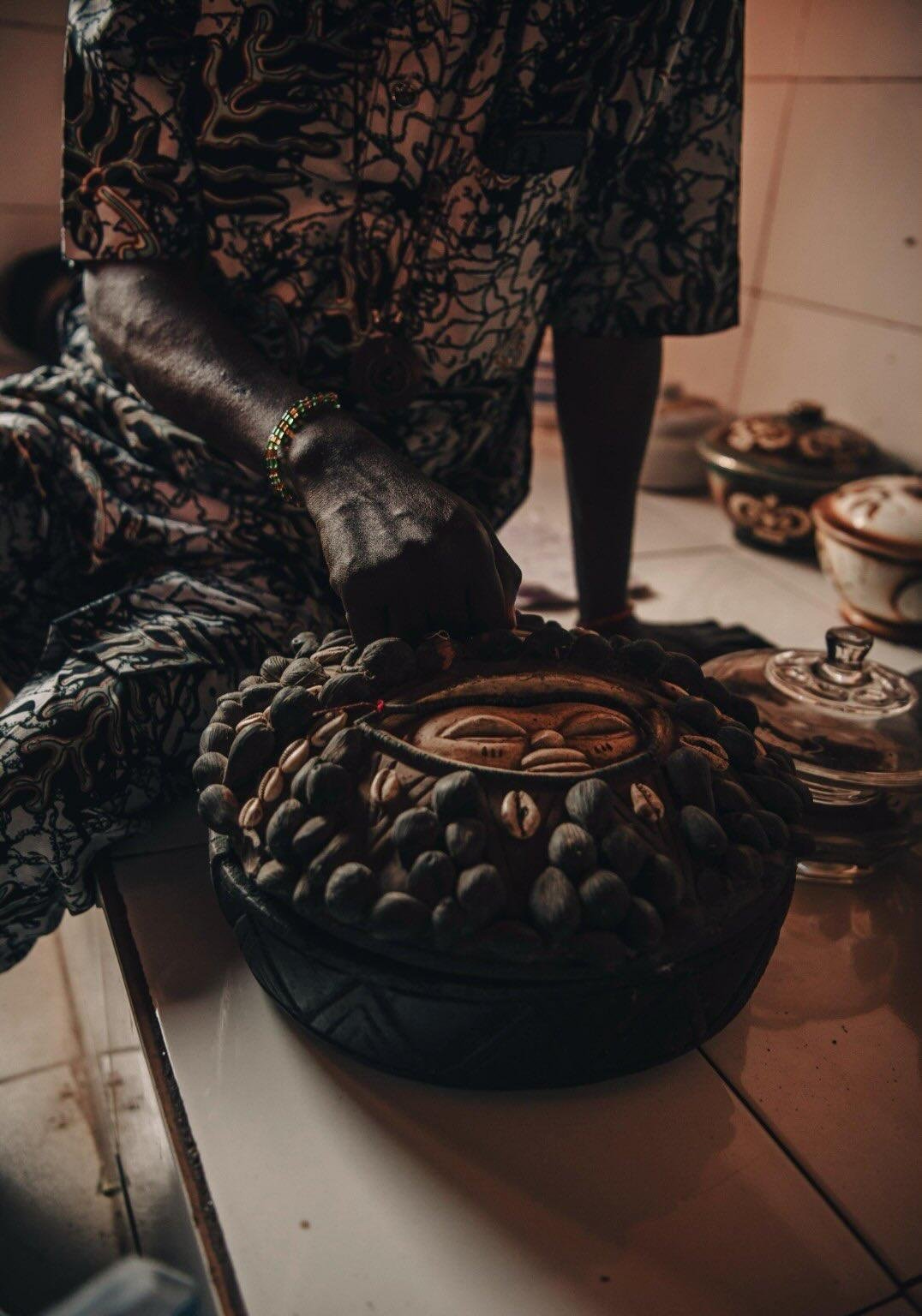
An object associated with the Yoruba Ifá tradition — Wisdom. Destiny. Guidance+ Photographed by Day Martins

Children of the community during Dr. Xander Pratt’s Ile-Ife visit — a reminder that living heritage is carried forward by the next generation- Photographed by Day Martins
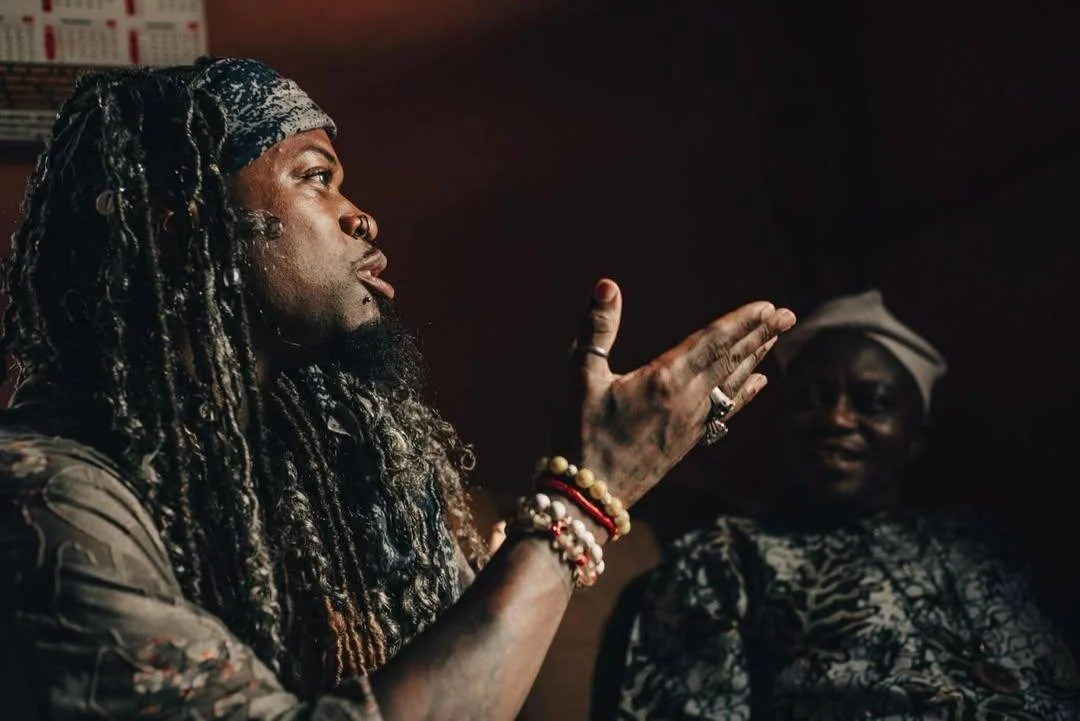
Dr. Xander Pratt in conversation with a community elder, exchanging knowledge around heritage, memory and tradition- Photographed by Day Martins
NIGERIA: WHERE THE SOURCE IS STILL LIVING
The Nigerian chapter did not end in Ile-Ife. From the spiritual and cultural source, YORUBAHIA moved onward into contemporary Nigeria, carrying its questions about memory, sound and living tradition into Lagos.
That contrast matters to YORUBAHIA. The film is not searching for a frozen version of Africa to compare with Brazil. It is interested in cultures that are alive on both sides of the Atlantic — changing, improvising and still carrying memory. To understand what travelled across the ocean, the project first has to understand what continues to live at the source.
YORUBA CULTURE: MEMORY IN LANGUAGE, SOUND AND RITUAL
Yoruba culture is not a single object that can be lifted out of history and displayed. It is carried through language, oral tradition, praise poetry, music, visual art, kingship, family and spiritual practice. Ile-Ife holds particular importance within Yoruba tradition as an ancestral centre and, in many Yoruba accounts, the place from which the world and Yoruba civilisation began. That symbolic weight helps explain why the Nigerian journey begins there rather than treating “Yoruba” as an abstract label.
The culture’s spiritual vocabulary is equally layered. Ifá divination preserves an extensive body of verses and knowledge, while devotion to oriṣa links human experience to forces associated with wisdom, water, iron, thunder, fertility and other dimensions of life and nature. Sacred objects, shrines, priests and ritual specialists therefore exist within larger systems of memory and interpretation. For YORUBAHIA, encountering these traditions in community gives the later Brazilian chapter a living point of reference rather than a purely historical one.
Sound is one of the clearest bridges. Yoruba oral traditions have long intertwined poetry, music, dance and performance; drums can carry rhythm, praise and social meaning, while songs and repeated phrases transmit knowledge across generations. This is why Dr. Pratt’s conversations with elders and community members, and his time among children, matter to the film. The documentary is not only tracing where people moved. It is tracing how culture moves — from voice to voice, body to body and generation to generation.
THE FOLLOW-UP IN LAGOS
After his time in Ile-Ife, Dr. Xander Pratt travelled to Lagos for meetings with Nollywood and cultural observation in the country’s largest city. Lagos offered a contemporary counterpoint to Ile-Ife: a city of movement, hospitality, music, commerce and modern African energy, while remaining connected to the deeper cultural questions guiding YORUBAHIA. Citadel Hotel & Suites in Ikeja, Lagos, hosted the crew during the follow-up phase of YORUBAHIA’s Nigerian chapter. The setting offered a modern counterpoint to the cultural and spiritual immersion that anchors YORUBAHIA in Ile-Ife.
FROM FIELDWORK TO CULTURAL DIALOGUE
The Nigerian chapter also extended beyond field observation into institutional dialogue. A letter concerning YORUBAHIA was delivered for the Ministry of Art, Culture, Tourism and the Creative Economy, bringing the documentary’s questions about Yoruba heritage, cultural memory and international exchange into conversation with Nigeria’s wider cultural sector.
THE FILM MUST BE HEARD
The most distinctive element of YORUBAHIA may be its insistence that sound is not background. It is evidence, method and narrative. In acoustics, resonance occurs when a system responds strongly to a frequency close to one of its natural frequencies. Dr. Pratt’s artistic proposition takes that physical idea as a useful metaphor: place one rhythm beside another and listen for where memory resonates.
A drum begins in Ile-Ife; an answer is sought in Bahia. Gesture meets gesture. Voice meets voice. The documentary listens for rhythmic structures, chants, movement, call-and-response and spiritual uses of sound that can reveal both continuity and transformation. It is not attempting to prove that every Brazilian rhythm has a single Nigerian origin. Instead, it asks what becomes audible when related cultural histories are placed close enough to hear one another.
That makes YORUBAHIA a documentary designed as much for the ear as for the eye. Its proposed sound world brings together drums, voices, strings, rattles, chants, forest, ocean and silence. Music is not decoration laid over the images; it is one of the routes through which the film investigates memory itself.
A frequency becomes meaningful when something answers it. YORUBAHIA listens for the answer across the Atlantic.
NEXT CHAPTER: WHEN BAHIA ANSWERS
Dr. Xander Pratt is now in Brazil for YORUBAHIA’s next chapter. Brazil is familiar territory in his creative journey: previous visits have taken him into the country’s music, movement and cultural exchange, including his Brazilian Funk project, which brought amapiano and carioca funk into conversation in Rio de Janeiro. This return is more focused. After listening at the Yoruba source in Nigeria, Dr. Pratt is following the cultural current toward Bahia — asking not simply what crossed the Atlantic, but what survived, adapted and became newly Brazilian.
That question leads naturally toward Candomblé and the wider Afro-Brazilian world. YORUBAHIA does not present Bahia as a copy of Nigeria, nor does it reduce Brazilian culture to a single African origin. Instead, it follows continuity and transformation: Yoruba-derived Nagô-Ketu traditions alongside the multiple African and Brazilian realities that shaped Candomblé; music and movement as living archives; food, land, spirituality and ancestry as forms of cultural memory; and communities that continue to carry these histories through practice rather than preservation alone.
In Trancoso, Bahia, the research enters another phase. Helena Rosen, according to the YORUBAHIA project account, has hosted and supported Dr. Pratt’s work in the region, while the project’s relationship with the Peace Embassy of Brazil places this period of listening within a setting concerned with peace, cultural encounter and human connection. Here, the film’s central idea becomes increasingly audible: Nigeria establishes a source, but Brazil answers in its own voice.
That exchange will extend beyond the documentary itself. In December, Dr. Xander Pratt is set to host a film festival in Trancoso centered around the sound of Yoruba — creating a space where cinema, sound and cultural memory can meet on the Brazilian side of the Atlantic. It gives YORUBAHIA a living destination: not simply arriving in Bahia to document what remains, but bringing people together around what Yoruba sound, rhythm and memory have become across generations and geography.
The next chapter, then, is not about proving sameness. It is about recognition without erasure. A drum may begin in Ile-Ife and find an answer in Bahia, but the answer has travelled through centuries of rupture, survival, invention and exchange. YORUBAHIA listens to that distance rather than pretending it does not exist.
For Dr. Pratt, the journey from Ile-Ife to Lagos and onward to Brazil turns the Atlantic from a line of separation into a field of conversation. The documentary began with a question about what Africa remembered. Its next chapter asks what Brazil carried forward — and what can still be created when both shores are finally allowed to hear one another.
What happens when ancestral worlds hear one another?
Follow the journey as Dr. Xander Pratt traces Yoruba memory, sound and living culture from Nigeria to Brazil — and watch YORUBAHIA continue to unfold. Instagram:@xanderpratt
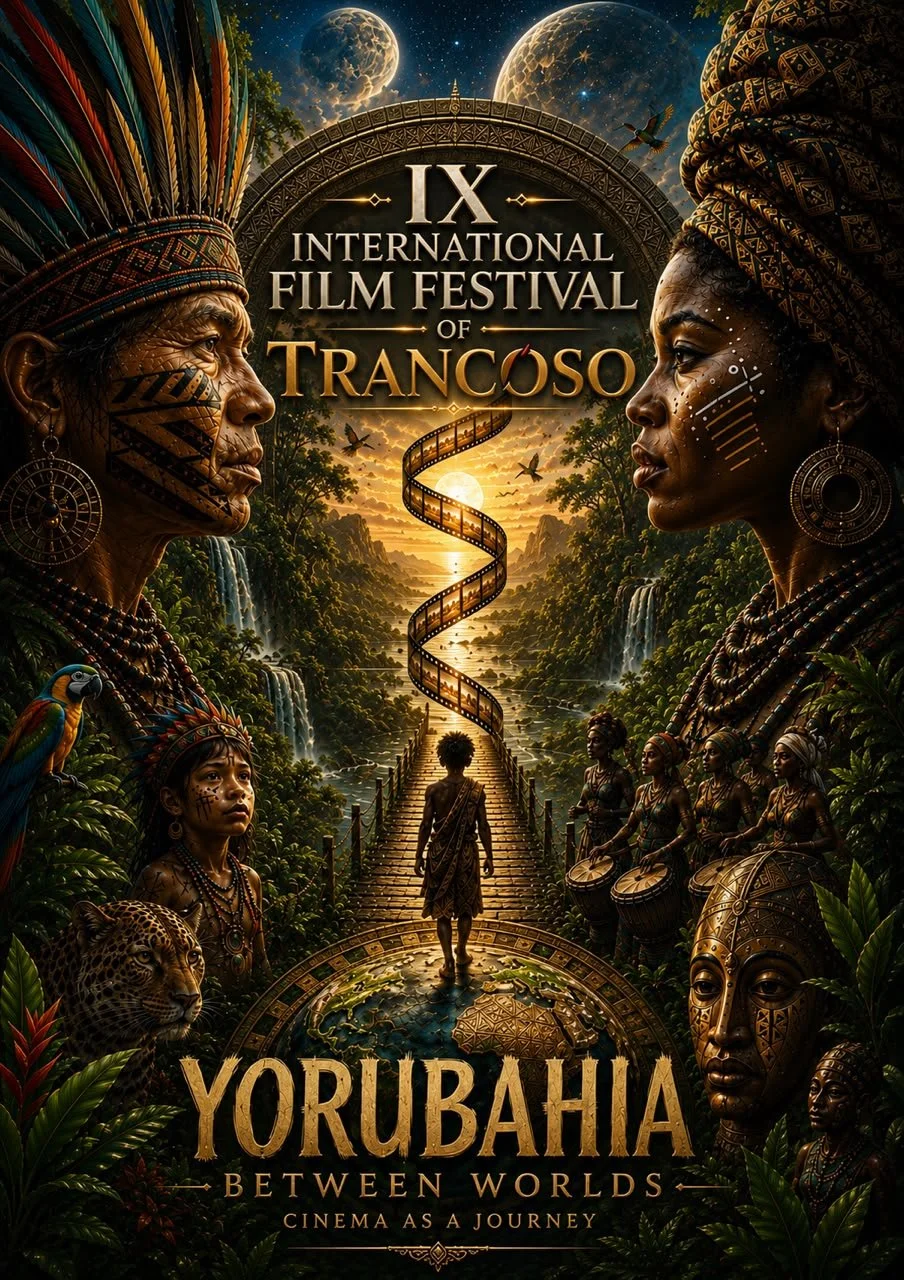
In 2027, Dr. Xander Pratt is set to host a film festival in Trancoso centered around the sound of Yorubahia
CREDITS & ACKNOWLEDGEMENTS
Nigeria- Ile Ife
Ife Grand Resorts And Leisure
During his stay in Ile Ife Dr. Xander Pratt received the hospitality of His Imperial Majesty, Ooni Adeyeye Enitan Ogunwusi and Her Regal Majesty Olori Temitope Morenike Enitan-Ogunwusi’s Ife Grand Resorts and Leisure. An almost regally comfortable stay, where he was generously assigned a car and driver at his disposal throughout his stay. Being able to Indulge in this leisure while being in the cultural hub of Yoruba and Nigeria was a true blessing in itself.


Nigeria- Lagos
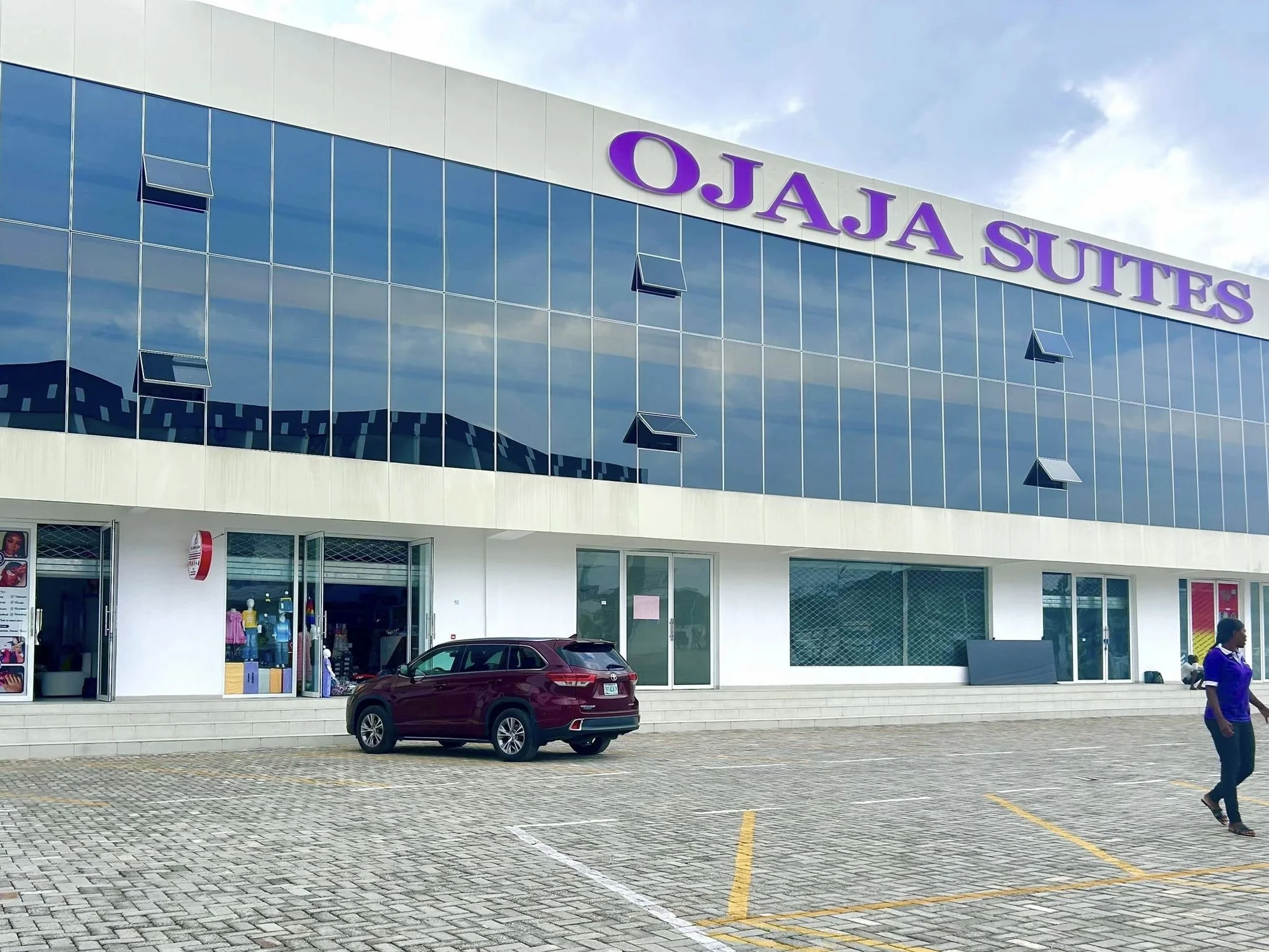
Ojaja Suites
After his time in Ile-Ife, Dr. Xander Pratt traveled to Lagos for meetings with Nollywood and cultural observation in the country’s largest city. Lagos offered a contemporary counterpoint to Ile-Ife: a city of movement, hospitality, music, commerce and modern African energy, while remaining connected to the deeper cultural questions guiding Yorubahia. His Imperial Majesty and Her Regal Majesty graciously again accommodated Dr. Xander Pratt in Lagos at Ojaja Suites. A central and beautifully comfortable accomodation.

BRAZIL
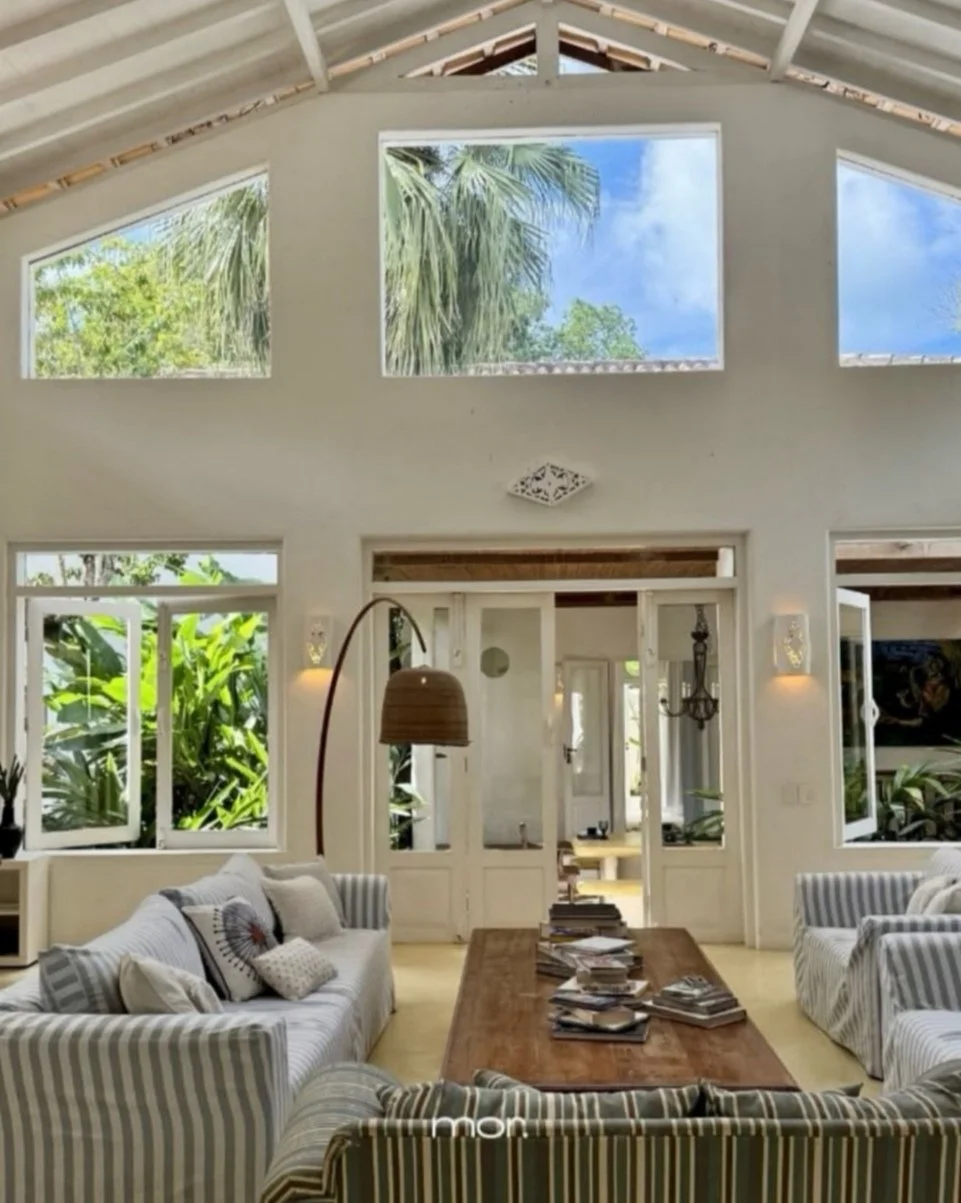
Vila do Divino in Trancoso, Bahia, accommodated Dr. Xander Pratt during the Brazilian chapter of YORUBAHIA, providing a base as the project continued its cultural research and listening across Bahia.

A Special Thank You To Her Regal Majesty Olori Temitope Morenike Enitan-Ogunwusi and His Imperial Majesty, Ooni Adeyeye Enitan Ogunwusi
A Special Thanks to His Imperial Majesty, Ooni Adeyeye Enitan Ogunwusi and Her Regal Majesty Olori Temitope Morenike Enitan-Ogunwusi, for not only their hospitality in Ile Ife at Ife Grand Resorts and Leisure, and subsequently in their Ojaja Suites Hotel in Lagos ; but their willingness to open up space culturally for Dr. Xander Pratt to immerse himself in Yoruba culture was truly magnanimous. The access to tribe elders community members deeply entrenched and intertwined in the traditions, rituals of Yoruba culture allowed Dr. Pratt to better understand its breadth and depth. We thank the royal family for the assigned car and driver that Dr. Pratt was provided with throughout his stay, this immensely helped logistically. The event access from birthdays, to culturally significant occasions, in which Xander was able to mingle with and converse with Nigeria’s powerhouses and understand how the Yoruba culture and the metropolitan aspects of Nigeria interact were amazing and invaluable experiences. These aspects brought an incredible amount of ease to Xanders research in Nigeria as he was able to do so comfortably and in a kind and welcoming environment. Thank you for inviting Dr. Pratt into your preverbial home and allowing him to experience as much of it as he did.

His Imperial Majesty, Ooni Adeyeye Enitan Ogunwusi
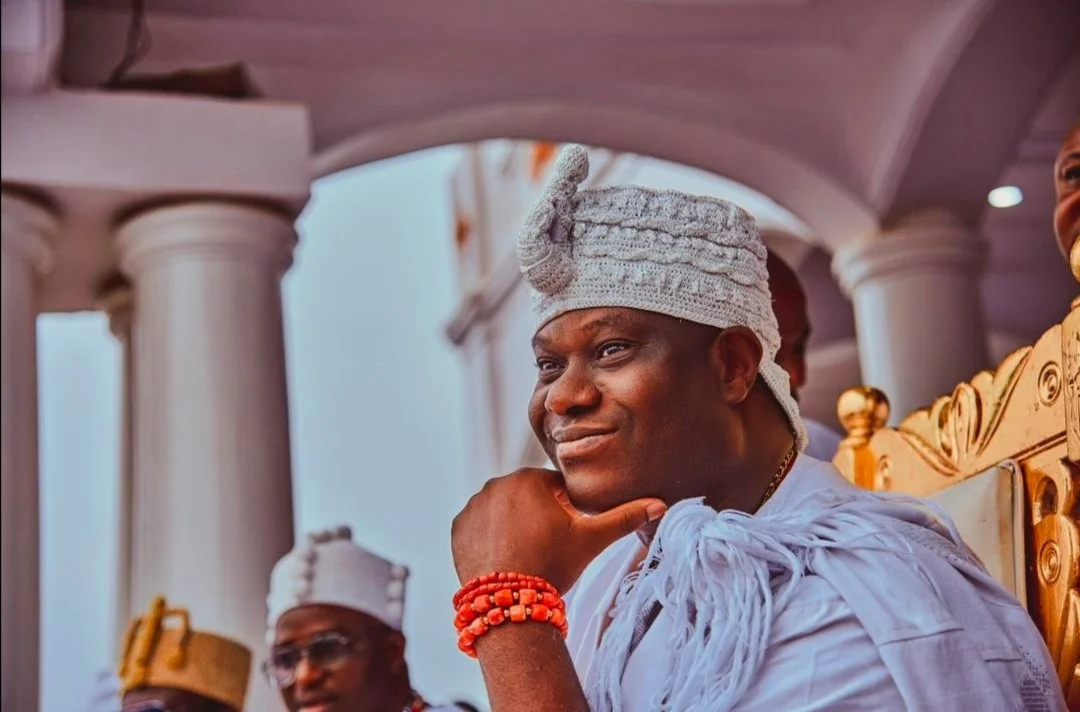
His Imperial Majesty, Ooni Adeyeye Enitan Ogunwusi

Her Regal Majesty Olori Temitope Morenike Enitan-Ogunwusi

Embaixada da Paz do Brasil 🇧🇷
Brazilian Peace Embassy
A space where action plans are created for the advancement of the Culture of Peace ✨🕊️
We strengthen and embrace community projects across Brazil.