KERUBO- THE SOUND OF MEMORY
From Kenyan roots and Kisii memory to Afro-jazz and oral history. Irene “KeruBo” Webster is building a body of work where music becomes a way to remember, reconnect and make room for belonging
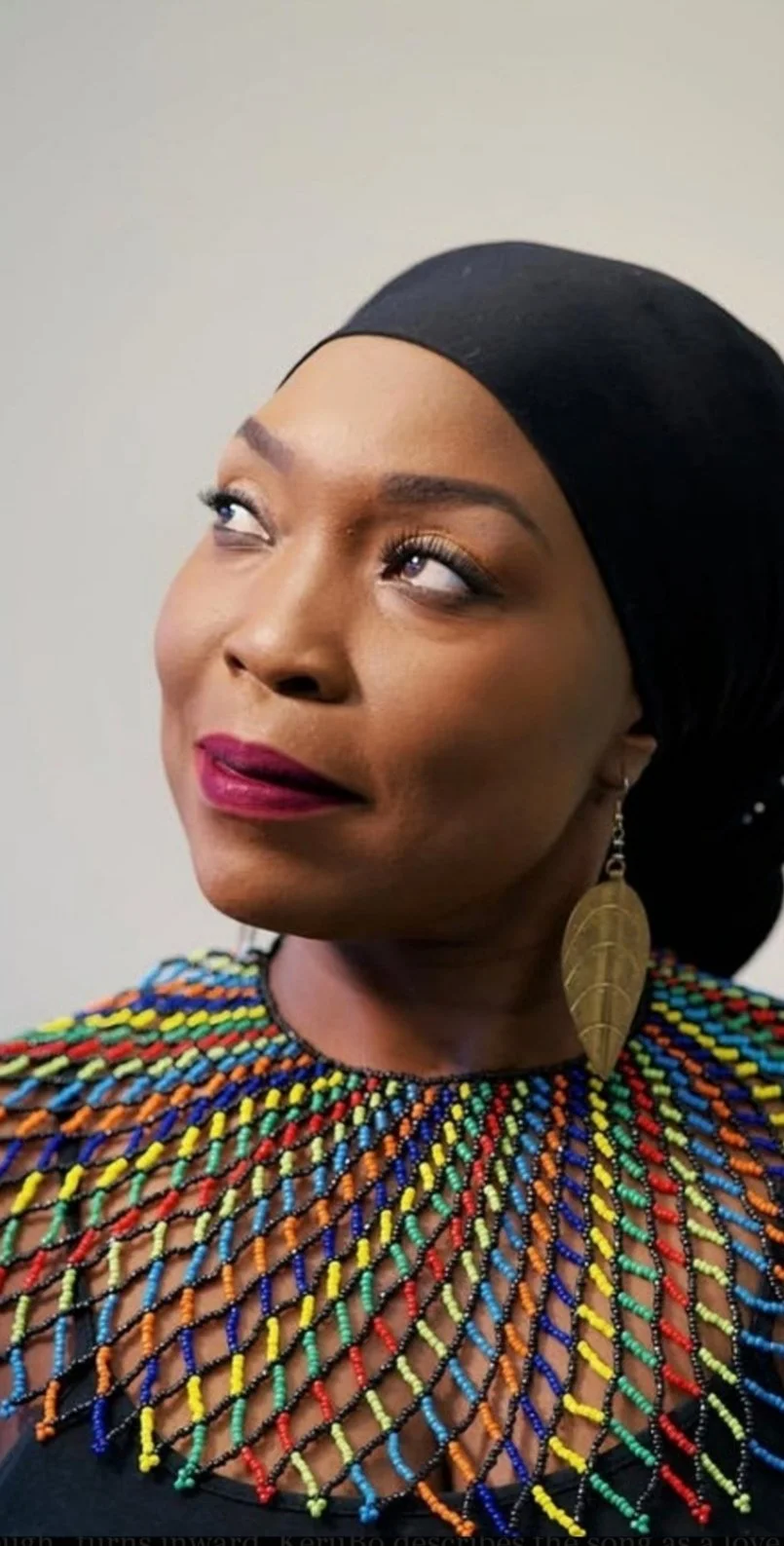
There are artists who perform songs, and there are artists who use songs to open doors into memory. Irene “KeruBo” Webster belongs to the second group. Kenyan-born, now residing on the Georgia coastline, she has spent more than two decades moving between stages, classrooms, community spaces and cultural conversations, carrying with her a sound shaped by African traditional music and expanded through jazz, blues, Brazilian samba and bossa nova.
KeruBo’s work is not easily contained by the word musician. On her own platforms she describes herself as a singer, songwriter and activist, while community partners have also framed her as a cultural worker and advocate. Across those descriptions is a consistent idea: music can preserve heritage, teach history, make space for healing, and help people recognize one another.

A NAME THAT CARRIES HOME
KeruBo is not a stage name chosen at random. It is her middle name, a direct thread back to Kenya and to the identity she carries into every room she enters. Public profiles of her work describe that connection as a form of cultural reclamation: rather than allowing distance, migration or the history of colonialism to sever the relationship with home, she places Kenyan and African memory at the center of her artistic practice.
That sense of continuity is audible in the music. Her sound draws from African folk traditions while making room for Brazilian samba and bossa nova, jazz and blues. Her influences include Miriam Makeba, Dorothy Masuka and Nina Simone — artists whose music could be beautiful and politically conscious at the same time. KeruBo has followed a related path, using melody as both invitation and statement.
THE NAME AS REINTRODUCTION
In reflecting on the name KeruBo, Webster makes its significance even more personal. Kerubo is her middle name as well as her stage name — a choice she describes as a way of reintroducing herself onstage through a name that carries her own cultural history.
“English is an imposed language by British Imperial colonialists,” she says, reflecting on the history of colonialism and its attempts to disrupt African cultures and ways of life. Yet her artistic response is not to retreat from the wider world. It is to place African identity, language and story back at the center of the encounter.
“When I am on stage, I’m telling stories about Africa and also singing songs about other African cultures.” For KeruBo, learning those cultures and the languages connected to them is part of the responsibility of performing them. A song is not simply a melody to reproduce; it carries the traditions of the place it comes from, the circumstances in which it was written, the era that shaped it, and the instruments and voices that gave it life.
That knowledge is central to her identity as a teaching artist. “My cultural identity isn’t limited in music, but I need to understand the music I’m singing about,” she explains. The deeper the research, the more fully she can tell the story around the song — turning performance into an opportunity for cultural education and connection.

HALI YA UTU: THE STATE OF HUMANITY
Her debut album, Hali Ya Utu, released in 2021, gives this philosophy a name. The Swahili phrase translates as “state of humanity,” and the album examines the human condition and the need to reconnect with utu — a sense of humanity, brotherhood and shared responsibility. The record gathers years of writing and performance into a body of work that moves between lament, tenderness, cultural memory and self-acceptance.
The album’s range also makes clear why KeruBo’s music resists a single genre label. African traditional music sits alongside jazz, blues and Brazilian influences, while traditional songs and original compositions share the same space. Her version of “Malaika,” for example, places a familiar Swahili song within the album’s wider conversation about human connection.
YOU ARE ENOUGH
If Hali Ya Utu asks what it means to live together, “You Are Enough” turns inward. KeruBo describes the song as a love letter to anyone who has felt invisible, unheard or unworthy — a direct affirmation of value in a culture that can place relentless pressure on appearance, identity and belonging.
The work has also been connected to a broader community conversation around self-acceptance and colonial beauty standards. A 2024 arts funding announcement noted support for a collaboration involving KeruBo and the Head Stretchers Society to produce a music video for the song, explicitly framing it around self-acceptance and challenging colonial beauty standards.
That is characteristic of KeruBo’s approach: the message is personal, but the destination is communal. A song about the individual becomes a conversation about the systems and expectations that shape how people see themselves.
THE CLASSROOM IS ANOTHER STAGE
KeruBo’s teaching work makes the connection between music and cultural education even clearer. She has served as a teaching artist with Clemmons Family Farm’s Windows to A Multicultural World program, engaging K–12 students around African American history, African Diaspora culture and social justice. The work uses arts and storytelling not as decoration around history, but as a way into it.
One example is Vroom!, an educational music video created through Clemmons Family Farm’s Joy in Motion curriculum. KeruBo composed and performed the song about Bessie Coleman and Bessie Stringfield, two pioneering African American women whose lives challenged racial and gender expectations around movement, technology and freedom. The project brought together students, teachers, artists and community partners, turning research into a shared creative experience.
Her more recent work has continued along that same path. In 2025, KeruBo was selected with singer-songwriter Stephanie Wilson for Clemmons Family Farm’s UnderWater, UnderGround artist residency. Their research explored the ecological, geological and cultural histories of the Lake Champlain Basin, including the Underground Railroad and the region’s freedom seekers. The resulting work included artist talks, community workshops and musical performance.
FROM THE DIASPORA, BACK TO CONNECTION
Migration is not a footnote in KeruBo’s story; it is part of the lens through which she makes art. Her move from Kenya to the United States placed her inside the African diaspora she now explores through music and teaching. In a 2024 profile, she described retaining culture in a new home as especially important for immigrants and spoke about music as a way of staying connected.
That connection extends outward. KeruBo has described herself as being “all about connecting cultures,” and the collaborations around her work reflect that principle: schools, farms, arts organizations, musicians, students, historians and community audiences become part of the same ecosystem.
Her music therefore does something quietly ambitious. It refuses the idea that cultural preservation means keeping tradition frozen. Instead, it lets tradition travel — from Kenya to the Georgia coastline, from oral memory into recorded music, from African history into classrooms, and from one generation into another.
THE STORIES THAT STILL NEED TO BE HEARD
KeruBo’s work matters because the stories she carries are not only about the past. They speak to questions that remain immediate: Who gets remembered? Who gets to define history? What happens to identity when people migrate? How can communities preserve heritage without closing themselves off from change? And how can art create spaces where people who have been separated by geography, history or experience can recognize something of themselves in one another?
The answers are not delivered as lectures. They arrive through songs, workshops, conversations, movement and the simple act of gathering people around a story. KeruBo’s art leaves room for the listener to bring their own experience into the work — a quality that allows the songs to keep evolving as they move across generations and places.
THE MEASURE OF THE WORK
Looking ahead, KeruBo does not describe retirement as an exit from creativity. She describes continuing to grow as a singer, artist and storyteller, with an ambition to create work that “touches the heart” and to collaborate with artists from different cultures in ways that continue to enrich her craft.
The measure of that future, however, is not fame. “It’s not the fame for me, it’s how I impact people,” she says. That distinction may be the clearest way to understand the larger purpose behind her work: the performance matters, but so does what remains with the listener after the performance ends.
“My artistry was given to me by God. It’s a way for me to reach people,” she says. And the people she encounters are often already searching. “People are curious to learn about African songs, African language, and African culture. They are crying for connection to the motherland.”
That hunger for connection to the motherland gives KeruBo’s work an emotional center that reaches beyond genre. For her, the curiosity people bring to African songs, African languages and African culture is also a longing for connection — a desire to understand, remember and feel closer to something that may have been separated from them by distance, migration or history. Her music becomes a meeting place where listening can become learning, and learning can become belonging.
THE NEXT CHAPTER
KeruBo’s work asks us to listen differently — not only for the music, but for the history, language, memory and human connection carried inside it.
For anyone who wants to hear that connection for themselves, explore her music, stories, performances and cultural work. The invitation is simple: listen, learn, and see where the song takes you.
LISTEN • EXPLORE • CONNECT
Explore KeruBo’s music & work → www.kerubomusic.com
Because sometimes the most meaningful way to reconnect with a culture is simply to begin by listening.