The Doctor Is In: Dr. Heavenly Kimes Takes the Pulse of Politics
After a run for Congress, Dr. Heavenly did not retreat from public life. She rebuilt her microphone around healthcare, voting, accountability and the everyday consequences of policy, bringing a clinician’s instinct for asking what hurts, why it hurts and what happens next to a new kind of political conversation.
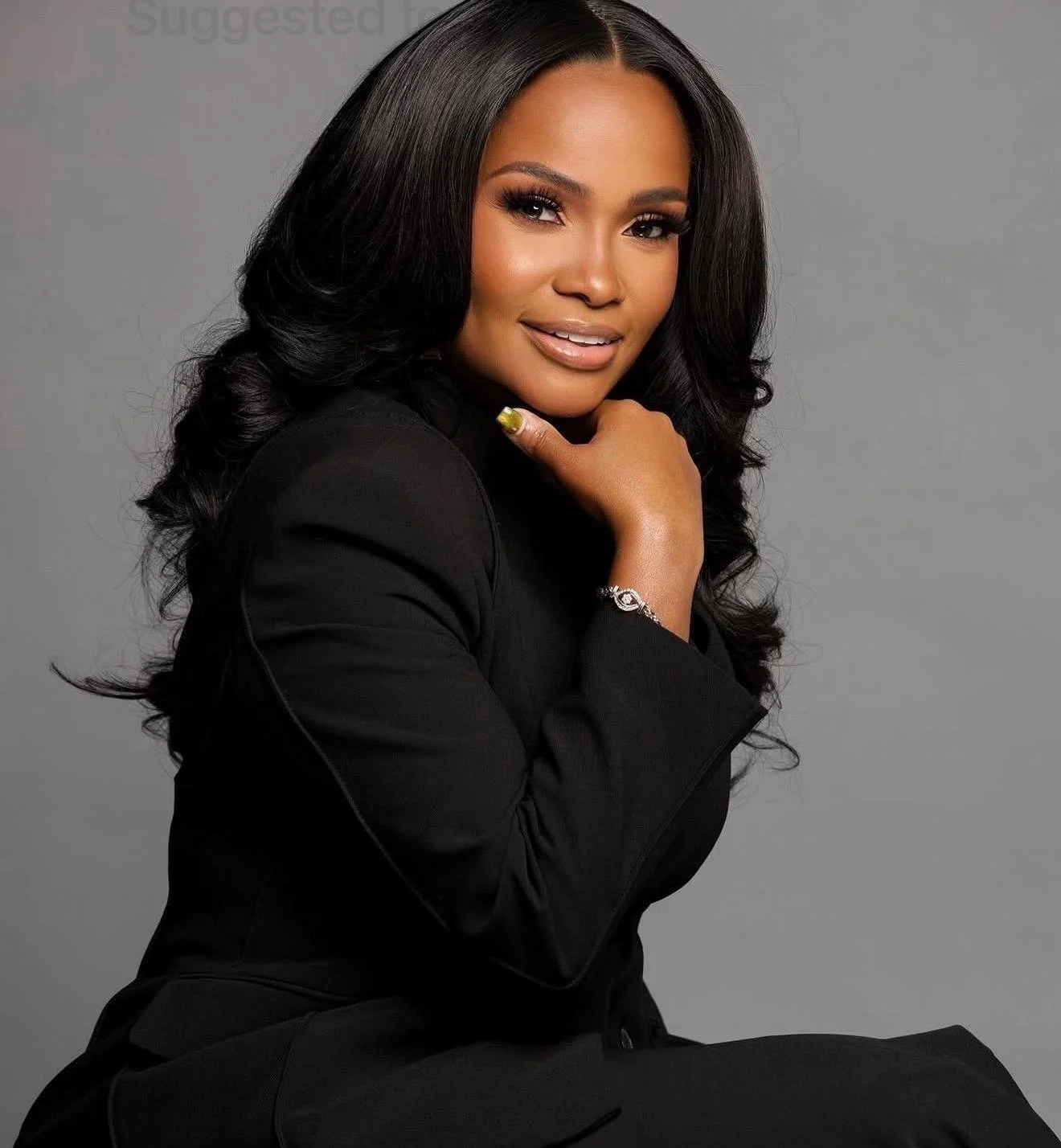
In medicine, treatment begins with a question: What is happening, and what is causing it? Dr. Heavenly has spent more than two decades building a career around patients, businesses and public communication. In 2026, after entering a congressional race, she began applying that same diagnostic habit to a different kind of examination room: public life.
The result is Unpolished with Dr. Heavenly, a weekly show that now places politics beside healthcare, business, culture and relationships. The tone is unmistakably Heavenly — direct, conversational and comfortable with disagreement — but the subject matter has widened. Georgia elections, prescription costs, civil rights, voting access, data centers, local government and the future of work have all moved across the microphone.
What makes the shift interesting is not that a celebrity has opinions about politics. Plenty do. It is that Dr. Heavenly increasingly organizes those conversations around lived consequence. Her recurring questions are practical: Who is affected? Who is responsible? What does this decision cost ordinary people? What information is missing? And what can citizens actually do next?
From White Coat to Ballot
Dr. Heavenly entered the 2026 Democratic primary for Georgia’s 13th Congressional District as a dentist, entrepreneur and television personality attempting a transition into elected politics. Official Georgia results show that she received 23,537 votes, or 21.48 percent, in the May 19 primary. Jasmine Clark won the nomination with 61,504 votes, or 56.13 percent. Dr. Heavenly’s own website now describes her as a former congressional candidate.
The campaign itself centered issues that already sat close to her professional and community work: healthcare access, mental health, affordability, economic opportunity and service. In an Essence interview during the race, Dr. Heavenly described public service as an extension of work she had already been doing in her community. Her official biography likewise connects her advocacy to preventive care, expanded healthcare access and mental-health awareness.
The election result closed one route to Washington, but it did not close the political chapter. Instead, Dr. Heavenly kept talking — and, more importantly, kept bringing other voices into the conversation
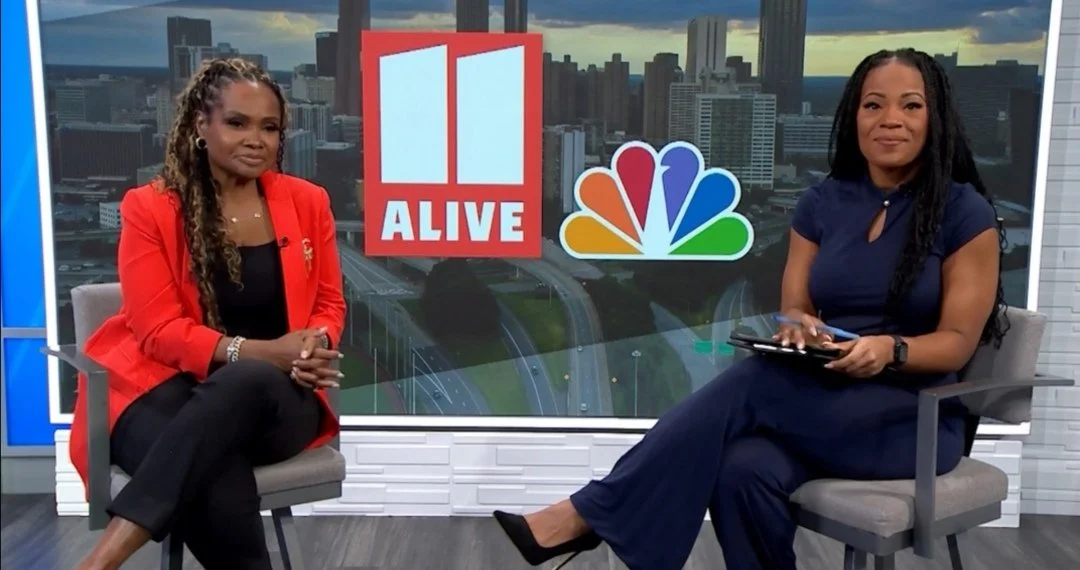
A campaign-era television interview shows Dr. Heavenly moving from entertainment media into direct political questioning — a useful visual bridge between the public persona viewers knew and the civic platform she was building.
Source: 11Alive — 1-on-1 with Dr. Heavenly
SECOND PLACE AND A HIGH-SPENDING PRIMARY
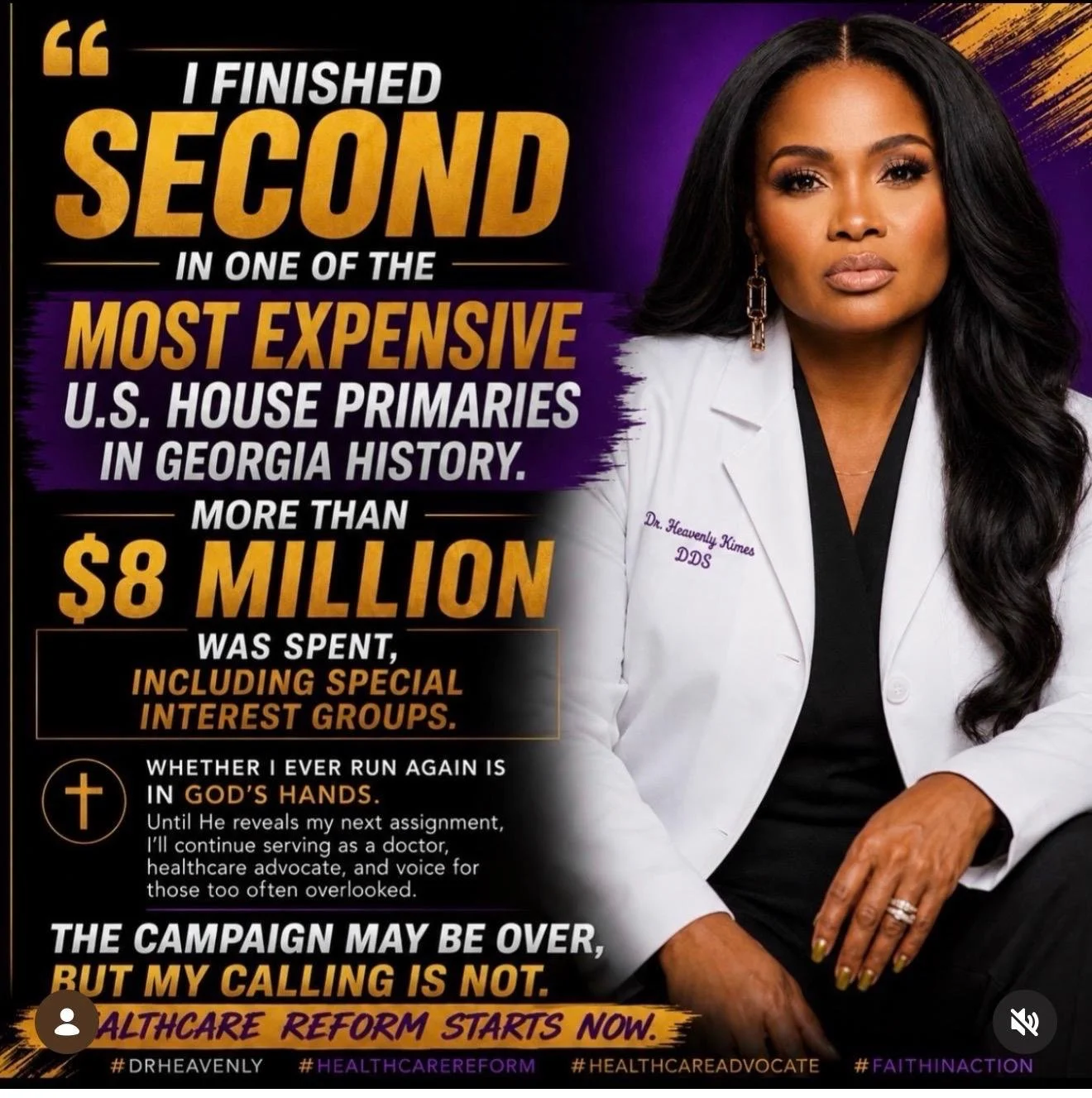
In a post-campaign reflection, Dr. Heavenly points to her second-place finish in Georgia's 13th Congressional District Democratic primary and the scale of spending around the race, while saying her healthcare advocacy will continue beyond the campaign.
The election result is clear. In the May 19, 2026 Democratic primary for Georgia's 13th Congressional District, Dr. Heavenly finished second with 23,537 votes, or 21.48 percent. Jasmine Clark won the nomination with 61,504 votes, or 56.13 percent. The graphic therefore accurately reflects Dr. Heavenly's second-place finish.
The reference to more than $8 million being spent is about the broader financial scale of the contest, not money spent by Dr. Heavenly alone. Federal Election Commission records show that Dr. Heavenly's campaign reported $906,482.64 in disbursements through June 30, while Clark's campaign reported $1,389,934.64. Other candidates in the district also reported substantial campaign spending.
Outside money was another major part of the race. The graphic describes this as spending by "special interest groups"; in federal campaign-finance terminology, the relevant category is independent expenditures by outside political committees. FEC-derived records show about $4.2 million in independent spending supporting Clark, with the super PAC Protect Progress accounting for roughly $4.21 million. Independent expenditures are made outside a candidate's campaign and are not supposed to be coordinated with that campaign. When candidate spending and this outside spending are considered together, publicly reported totals around the race can exceed $8 million, depending on the committees and reporting periods included.
One part of the graphic requires a distinction. RDC did not find an official historical ranking that establishes this contest as one of the most expensive U.S. House primaries in Georgia history, so that phrase is best understood as Dr. Heavenly's own characterization of the race rather than an independently verified ranking. What is verifiable is that the primary attracted several million dollars in candidate and outside spending.
The more revealing part of the post is what Dr. Heavenly says comes next. She writes that whether she ever runs again is "in God's hands" and says she will continue serving as a doctor, healthcare advocate and public voice. Her closing line - "The campaign may be over, but my calling is not" - fits the larger arc of her post-election platform: the ballot chapter ended, but healthcare and civic conversation remained central to what she wanted to do next.
AFTER THE BALLOT, THE MICROPHONE
The clearest explanation for the pivot came in a September 2026 interview with theJasmineBrand’s “Visionaries Only.” Dr. Heavenly said she had grown tired of centering her commentary on reality-television drama and felt there was “so much more to talk about.” She described leaving a format that, by her own account, could draw hundreds of thousands of viewers and then rebuilding a smaller audience around Unpolished. The interview also became one of the clearest markers of her transition away from reality-TV recap culture and toward broader conversations about politics, healthcare and community.
That choice matters because it changes the function of the platform. The old incentive was reaction: recap a show, revisit a feud, amplify a moment. The new incentive is inquiry. Unpolished still uses the speed, humor and personality of entertainment media, but its political episodes ask guests to explain systems — elections, legal accountability, local government, healthcare, technology and the economic choices sitting behind headlines.
Dr. Heavenly is not pretending the dental chair is a legislative chamber. Clinical experience does not automatically confer expertise on every policy question. What it does give her is a patient-facing frame of reference — one in which access, cost, trust and consequences are rarely abstract.
THE GUEST LIST TELLS THE STORY
The evolution of Unpolished is easiest to see through the people Dr. Heavenly has invited into the room. In July, she interviewed Marcye Scott about the Georgia 13th District special election and the issues facing the community. Another episode paired candidate Everton Blair with political strategist Fred Hicks for a conversation spanning the special election, healthcare and what voters should know. Unpolished has become the center of that post-campaign public voice, placing politics and healthcare alongside business, relationships and culture.
Former Mississippi judge Carlos Moore and attorney Brooke Cluse, a member of Ben Crump’s legal team, joined a discussion about race, civil rights and nationally watched legal cases. Hip-hop pioneer Luther “Uncle Luke” Campbell appeared for a politically charged conversation about his congressional ambitions, free speech, affordable housing, economic opportunity, education and youth mentorship.
The scope widened again in August and September. Charmaine Augustine joined an episode connecting women’s entrepreneurship with healthcare affordability and voting rights. De Moine Kenny and a young political voice known as Noah discussed data centers, cryptocurrency, artificial intelligence, automation and regulation. Stockbridge Mayor Jaden Williams later sat down with Dr. Heavenly to unpack how local government works and to discuss youth programs, student lunch debt, estate planning and the community impact of data-center development.
It is a varied guest list, but not a random one. The common thread is power at street level: who makes decisions, who feels the consequences and how communities can understand, or challenge, the systems around them
HEALTHCARE IS WHERE HER WORLDS MEET
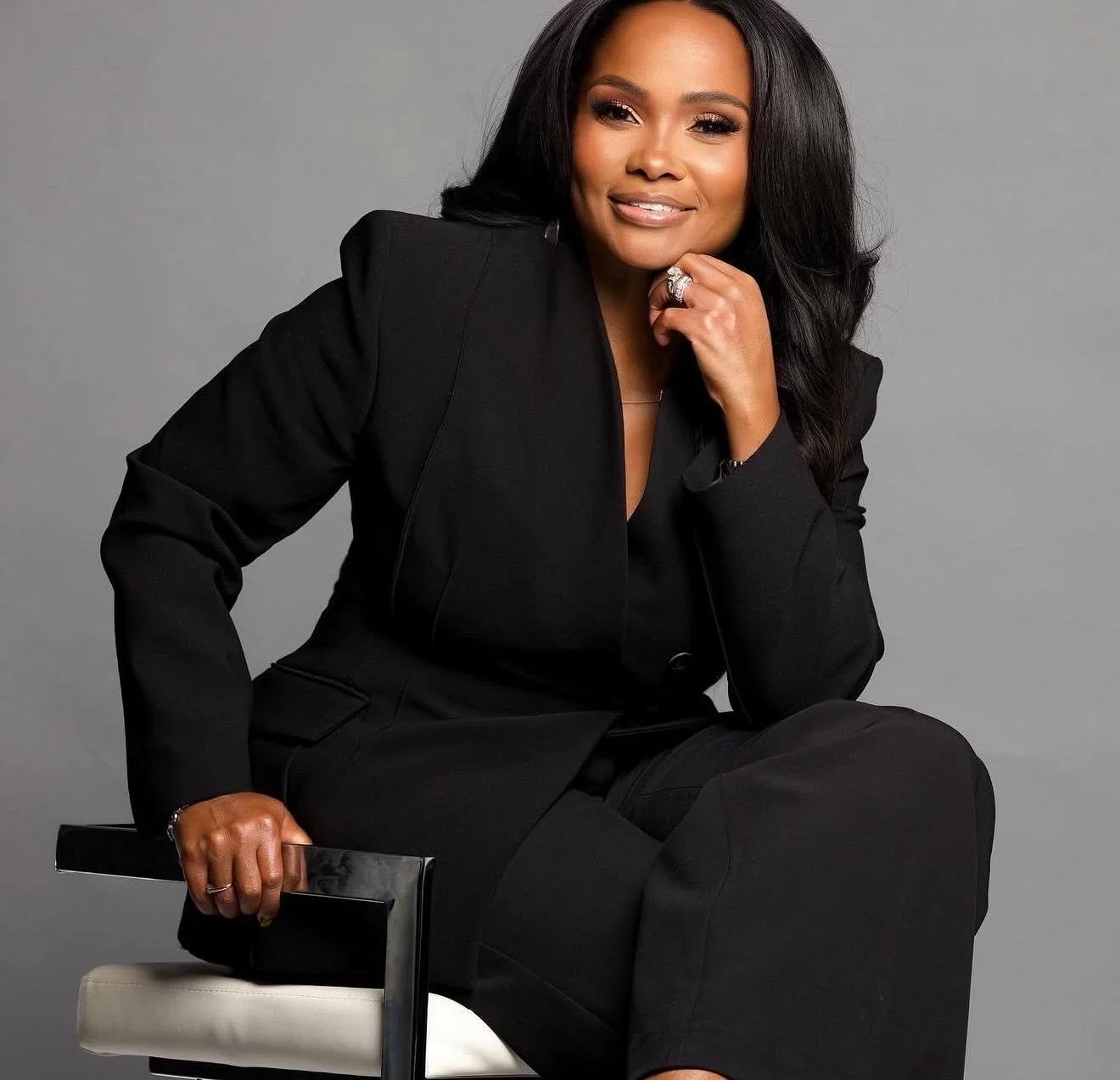
If there is one subject that makes the medicine-and-politics connection more than a metaphor, it is healthcare. Dr. Heavenly’s professional life has always involved the practical side of care: patients, treatment decisions, business operations and the anxieties that arrive with cost. Her campaign emphasized access and affordability, and the same themes have continued on Unpolished after the campaign ended.
That does not make every healthcare position self-evidently correct, nor does a medical credential resolve policy debates. But it does explain why Dr. Heavenly repeatedly pulls political conversations back toward what policy feels like in a household. Insurance premiums, prescription prices, mental-health support and access to care become less like talking points when they are framed as decisions people make under pressure.
For a public figure best known for a Bravo franchise, this is the most natural bridge between her old platform and her new one. She does not have to abandon personality to talk policy. She can use the same accessibility that made audiences watch television to make complicated public issues feel close enough to argue about, question and research.
A CONSISTENT QUESTION: WHO DOES THIS AFFECT?
Taken together, Dr. Heavenly’s recent interviews, campaign statements and social posts suggest a political instinct that is less about ideological branding than about consequence and accountability. Healthcare conversations ask what people can afford. Civil-rights conversations ask whether institutions are transparent. Technology conversations ask what communities are being told, or not told. Election conversations return to whether voters know the candidates and understand the stakes.
That pattern is especially suited to the kind of audience Dr. Heavenly already has. She is speaking to viewers who may arrive for personality, celebrity or “Married to Medicine” familiarity and then encounter a mayor explaining city government, an attorney explaining a legal process, a strategist explaining an election or a technology guest explaining the infrastructure behind AI.
The promise of Unpolished is not that everyone who watches will agree with Dr. Heavenly. A useful political platform does not require that. The more meaningful possibility is that the audience leaves with a sharper question than the one it arrived with.
FROM REALITY TELEVISION TO CIVIC MEDIA
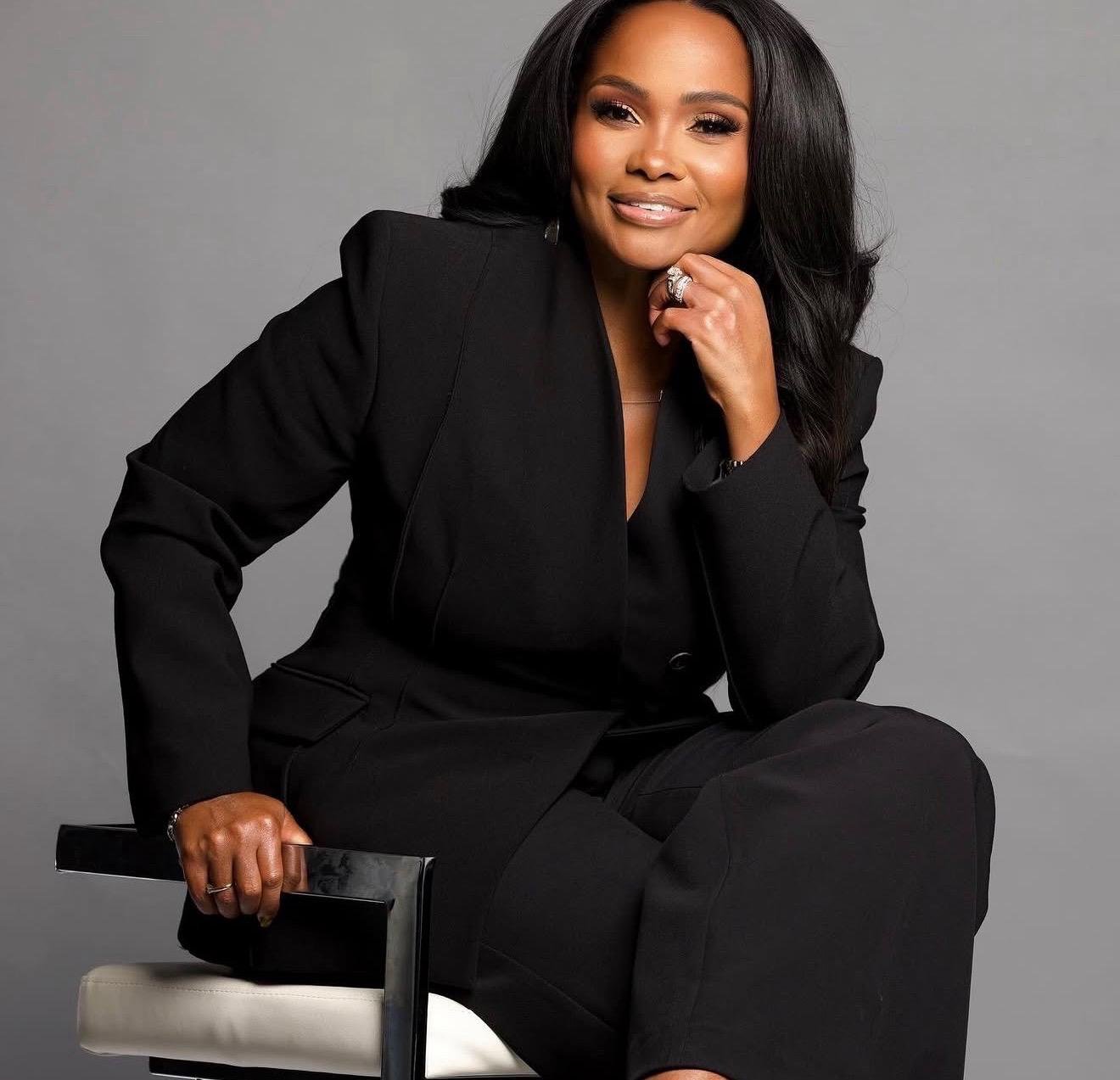
Reality television gave Dr. Heavenly something politics often struggles to manufacture: recognizability, directness and an audience accustomed to hearing her speak without sanding down every edge. Those qualities are not substitutes for evidence or expertise, but they are powerful tools for public communication.
Her post-campaign move is therefore less a reinvention than a reallocation. The same camera confidence that once powered recap culture is being used to ask mayors, candidates, lawyers, strategists and entrepreneurs about institutions. The same instinct for a provocative question is being pointed at healthcare costs, voting, civil rights and technology. The conversation is still unpolished. The stakes are simply larger.
The opportunity now is to keep pairing that candor with rigorous sourcing as the issues become more technical. If the show does that consistently, Dr. Heavenly has a distinctive lane: a clinician, entrepreneur and media personality translating public affairs into the language of everyday consequence.
THE DOCTOR’S NEXT ROOM
The most interesting part of Dr. Heavenly’s political chapter may not be whether she ever appears on another ballot. It may be what she does with the platform she built after the first one.
She has moved from candidate to interviewer, from asking voters to choose her to asking audiences to examine choices around them. In a media environment where political conversation is often reduced to teams and outrage, her strongest moments are the ones that return to diagnosis: What is the problem? Who is affected? Who has authority? What information should the public demand?
That is where the doctor-and-politics connection becomes more than a headline. A good examination does not begin with the prescription. It begins by paying attention. Dr. Heavenly’s new public lane is built around exactly that act, looking at what communities are experiencing, putting the issue on the table and refusing to pretend the symptom is the whole story.
COMING UP: DR. HEAVENLY HEALTHCARE INITIATIVE SUMMIT
On Saturday, October 24, 2026, Dr. Heavenly and her husband, Dr. Damon, will host the Dr. Heavenly Healthcare Initiative Summit at Voices of Faith Church with Rev. Gary Hawkins. Centered on “Health. Help. Hope.,” the gathering will bring healthcare, community support and faith together, with more details to come.
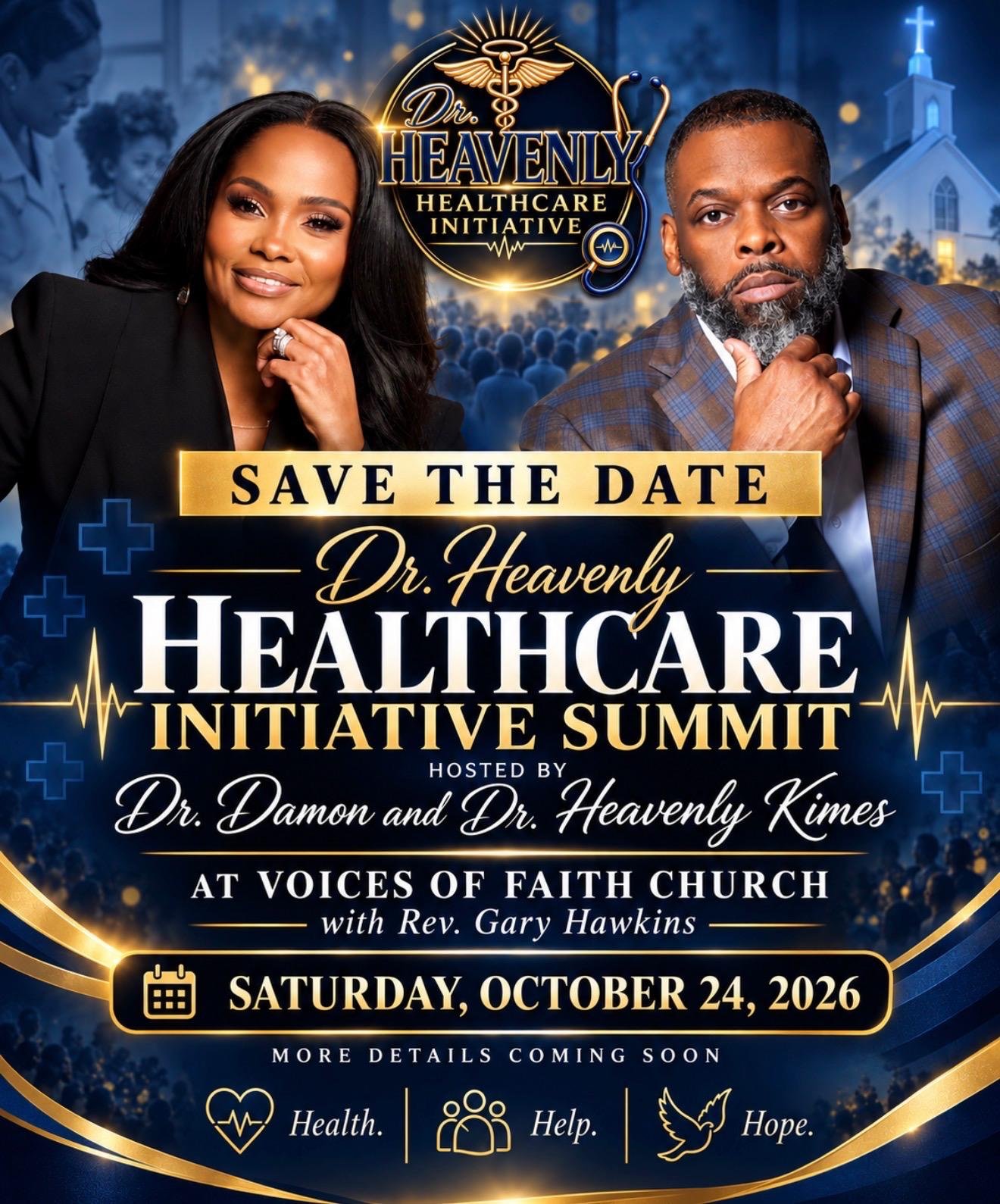
Save the date: Dr. Heavenly Healthcare Initiative Summit: Saturday, October 24, 2026, at Voices of Faith Church.